Manor House Gardens are very popular with Lee residents, according to our survey. More than two thirds of respondents said they visit the Gardens at least once a week with another fifth going at least once a month.
The vast majority – 82% – said the main attractions are the trees, plants and wildlife. 53% visit the cafe and 26% go for the children’s play facilities. Many people said they use the Gardens for exercise.
90% strongly support or support the project to restore the Big Bed near Manor House Library at the north end of the Gardens. 80% are enthusiastic about the idea of making it an educational experience, especially for children. 60% like the idea of adding a central path to allow visitors to get closer to the shrubs, plants and trees. More than half the respondents said these improvements would encourage them to visit the Gardens more often.
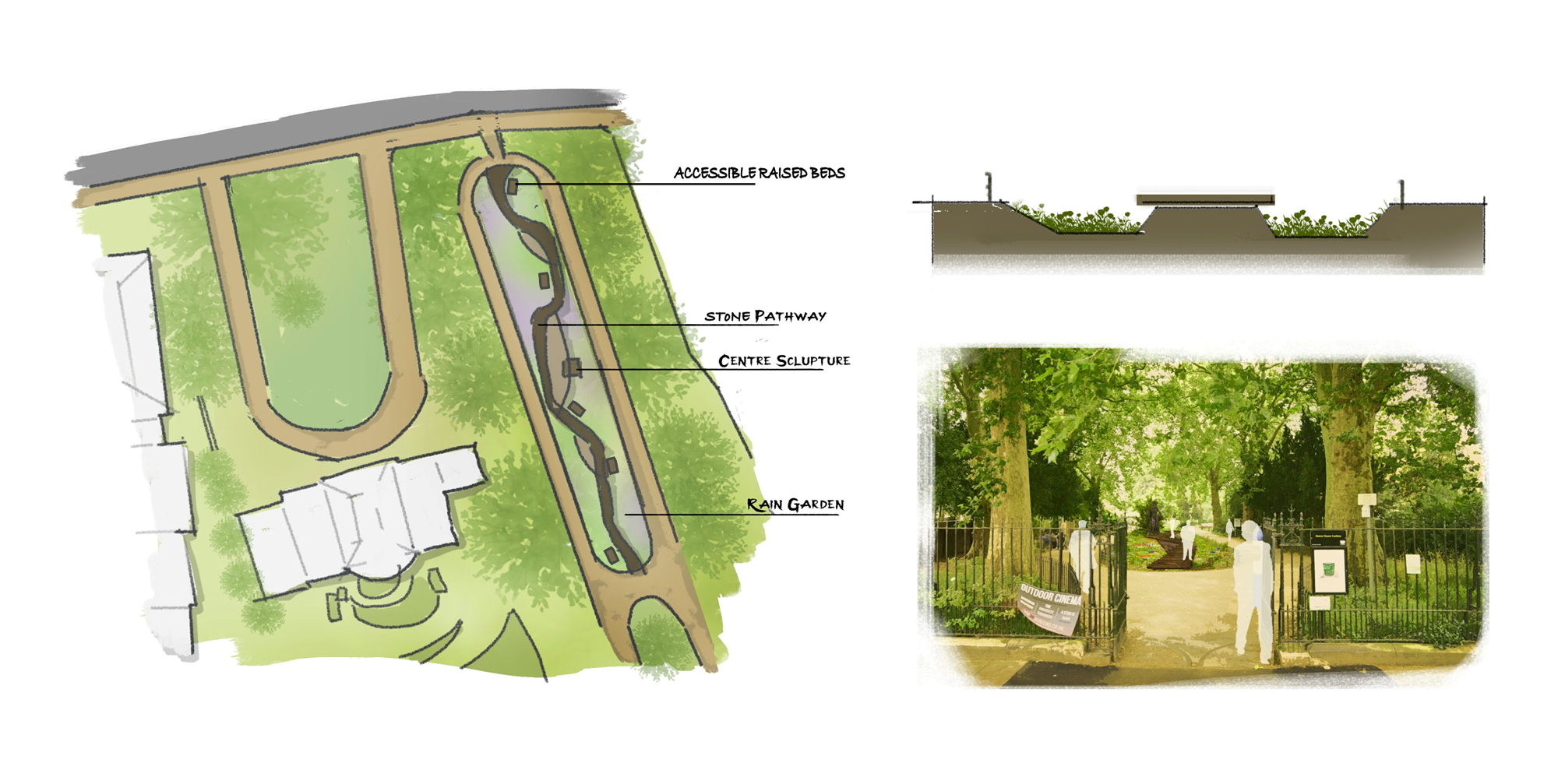
Artist’s impression of how the restored bed might look
We need your help with an important survey about Manor House Gardens. The Lee Manor Society and the Friends of Manor House Gardens want to know your views about our plans for the Big Bed at the north end of the Gardens (the one near Manor House library, just beyond the cafe).
As we have reported previously we won an NCIL grant to restore the bed, but we believe that with more grant-aid we can transform it into a first-class attraction in the Gardens. There would be raised beds, a bug hotel and signage to make it an educational and enjoyable experience for visitors of all ages.
Please spend a moment completing the survey – it shouldn’t take more than a minute of your time. The results will be invaluable in our campaign to make the Gardens an even better place to visit. Click here to complete it.
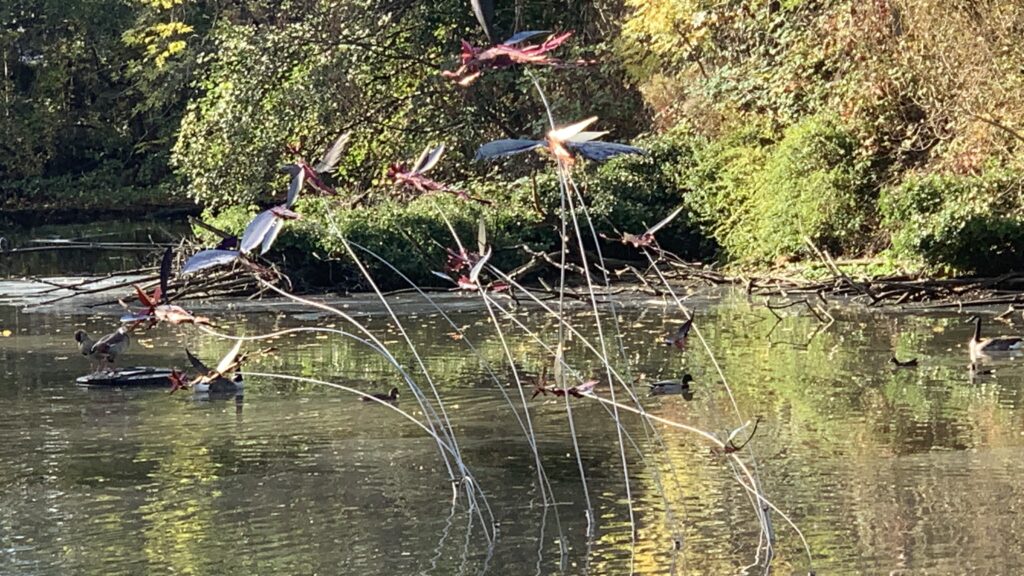
Next time you go to Manor House Gardens, take a look at a remarkable artwork celebrating migration which has just been installed in the lake. It’s so large it needed a crane to drop it into place.
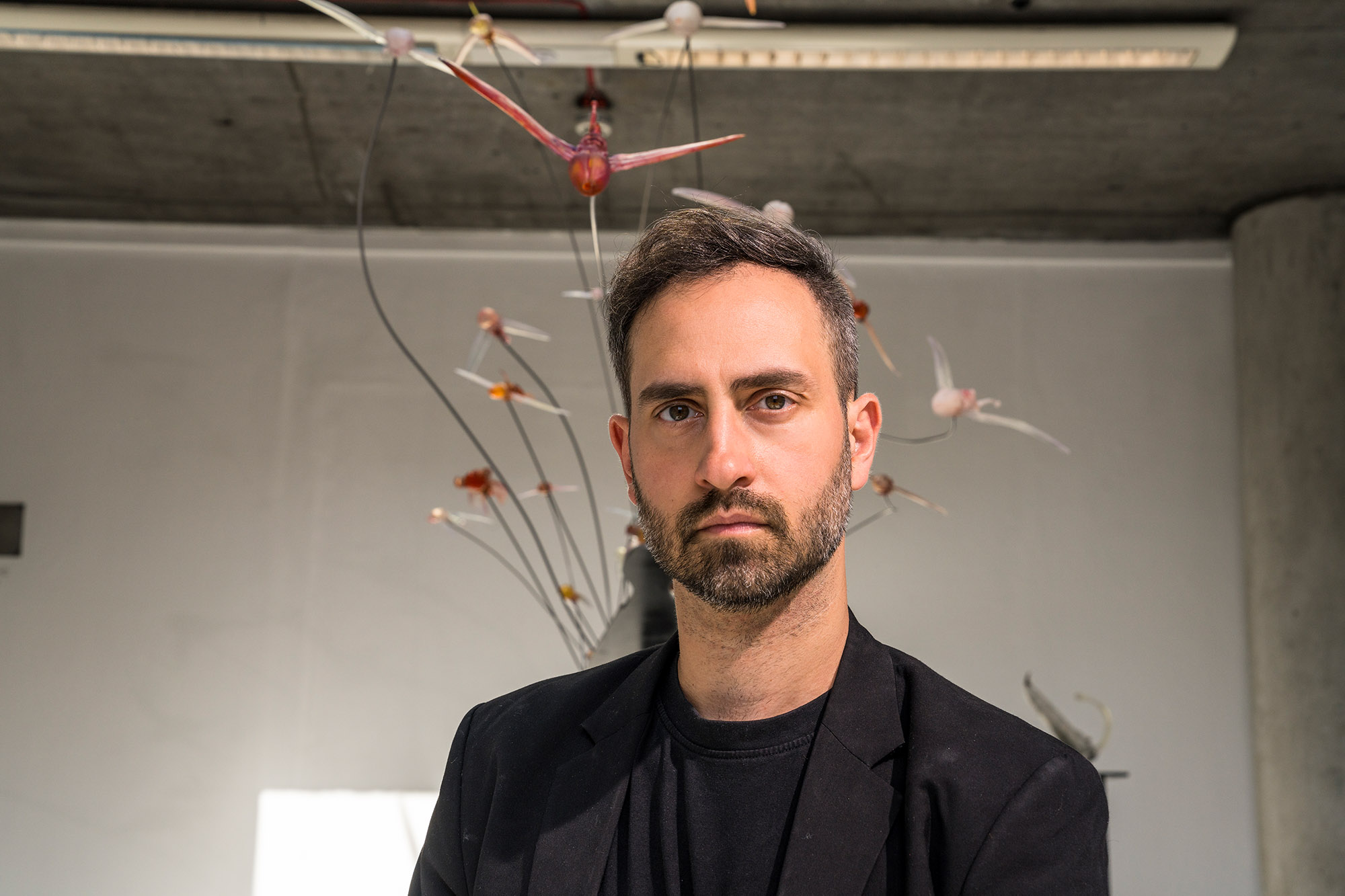
“To Move is to Bloom” (2025) is a large-scale, dragonfly-inspired sculpture emerging from the lake, symbolising migration as a natural cycle of resilience and renewal. Each piece is attached to a flexible pole so they move in the wind.
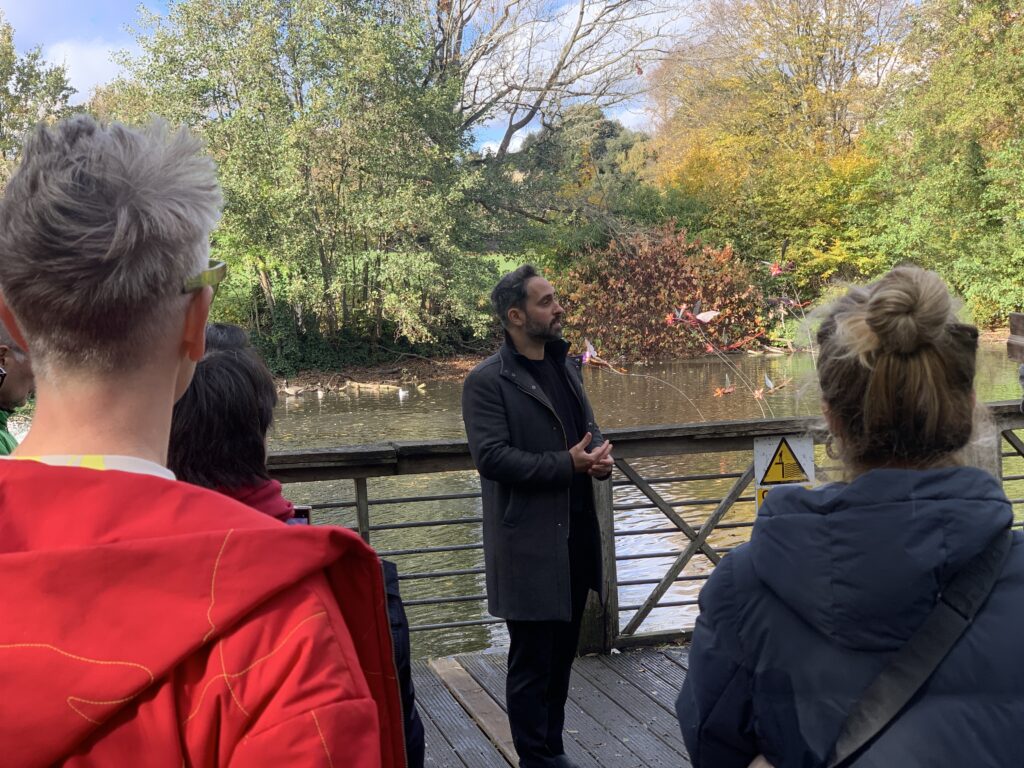
The work is by a Serbian born artist Vladimir Lalić who told us “I wanted to show migration as something deeply natural and transformative. Movement, both physical and emotional, is what makes life possible.”
His multi-pronged sculpture was laser-cut from stainless steel sheets, then bent, welded, and hand-painted in enamel varnish. Each element is unique: some more insect-like, others more floral or abstract. It sits on top of a heavy metal frame which rests on the lake bed.
A crane drops the sculpture into position in the lake
The sculpture is funded by an Arts Council grant which was secured by Tima Jam, a recent Lee resident who describes herself as an “Iranian-British curator, art consultant, and cultural strategist dedicated to amplifying emerging and underrepresented voices in contemporary art.”
Tima has young children and having spent many happy hours in Manor House Gardens thought it would be a good location for the project.
“As a nomadic and hybrid fair, we believe great art should not be limited to a single place; every two years, we will move to a new location with a fresh programme shaped by the local art scene.”
Art Voyage is behind two other projects in the Gardens:
Photo: Paul Lowndes
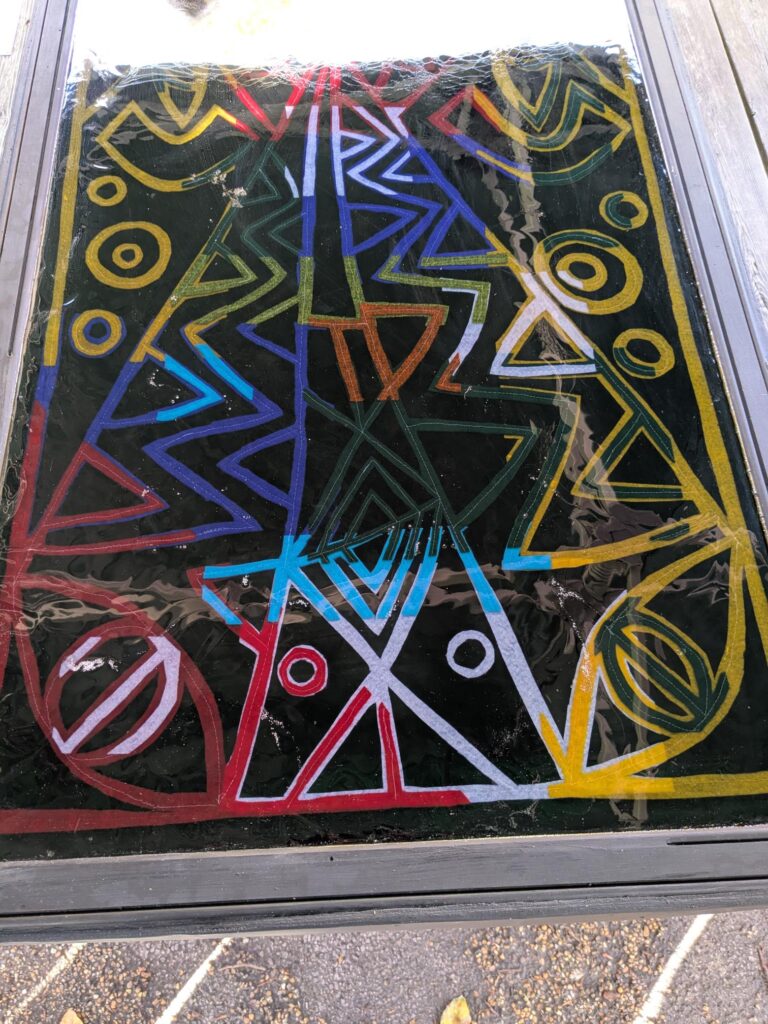
“Crafting Connections” (2025) by Alice Burnhope — created in collaboration with members of the Lewisham community in workshops at Manor House Library. It was unveiled at the Royal Society of Arts and the organisers are now seeking a permanent home for it.
Vladimir Lalić (b. 1983, Belgrade, Serbia) is a London-based multidisciplinary artist whose practice spans sculpture, installation, and performance. Having presented over 35 solo exhibitions worldwide and received six awards for visual arts, including the prestigious Prix Paul-Louis Weiller from the French Academy, his work explores transformation, hybridity, and the fragile states between being and becoming. He completed his MFA at Goldsmiths, University of London, establishing a strong connection with the Lewisham Borough.
Tell us about yourself, your background, and your previous work?
I’m a multidisciplinary artist working across drawing, sculpture, installation, and performance. Alongside my studies in printmaking, I trained as an opera singer and performed internationally with my band, which shaped my sense of rhythm, emotion, and storytelling. I was born in the former Yugoslavia and grew up in Belgrade during turbulent times. Experiencing political and social collapse deeply influenced how I think about identity, resilience, and transformation. I came to London to study for my MFA at Goldsmiths, which shifted my practice more towards sculpture. I now live and work here. My works often depict imagined hybrid species, part animal and part human, to explore our shared instincts and the ways we evolve socially and emotionally. My art mixes humour and absurdity with something very personal and emotional. I have a website: www.vladimirlalic.com and Instagram: @vladimir.lalic.
How did you make it?
My sculptures are laser-cut from stainless steel sheets, then bent, welded, and hand-painted in enamel varnish. Each one is unique: some more insect-like, others more floral or abstract.
What message is the installation intended to send? How did you get the idea?
The installation is about migration, about the beauty and difficulty of movement. I wanted to show migration as something deeply natural and transformative. Movement, both physical and emotional, is what makes life possible. The idea came from a natural phenomenon called cvetanje Tise, the “blooming of the Tisza River,” which happens in Serbia near Novi Bečej, where my grandparents were born. Once a year, millions of mayflies rise from the river, live for just a few hours, and fill the sky with shimmering wings. It’s a fragile but powerful moment of renewal. When I was invited to create a piece for Echoes of Migration, that image came to mind immediately. I imagined creatures emerging from the lake, part insect, part flower, rising upward and transforming as they go. The title To Move, is to Bloom says everything: through movement, life renews itself. What is the installation meant to signify? It’s about transformation and belonging. Migration is often seen as loss or displacement, but I see it as growth, painful at times, but essential. The sculpture speaks of resilience, adaptation, and how diversity strengthens communities. Each of the fifteen creatures rises from the water, shedding its old form and unfolding into something more open and complex, almost like it’s blooming into a new identity. It’s a metaphor for migration, but also for personal change, for how we all evolve through movement, even internally.
How long will your artwork stay in the Lake?
It’s designed as a permanent public artwork, intended to remain in the park for decades. The sculptures are made of stainless steel, hand-painted with French enamel varnish to endure weather, sunlight, and water. The idea is for the piece to age gracefully, changing with light and seasons, becoming part of the park’s landscape and memory. It’s obviously a bit political.
Are you worried it will attract negative attention from people opposed to migrants? Any artwork that deals with migration inevitably touches on politics, even if that’s not the main intention. But this piece isn’t about division, it’s about empathy and understanding. It celebrates resilience and transformation. It’s meant to spark conversation, whether positive or critical, and that’s healthy. Art should provoke dialogue, not avoid it. We’re even planning to include a QR code on the plaque so visitors can leave their thoughts and reflections. Everyone is entitled to their own response. I’m not worried about disagreement; I welcome it as part of the work’s life.