

Fans of Sherlock Holmes will know the short story “The Man with the Twisted Lip” first published in 1891. Less well known is the story’s brief reference to Lee, and the house knows as the Cedars.
Dr Watson recounts embarking on a trip across London and out into the countryside, with Holmes, to stay in the house.
“Now, Watson,” said Holmes, as a tall dog-cart dashed up through the gloom, throwing out two golden tunnels of yellow light from its side lanterns.
“You’ll come with me, won’t you?”
“If I can be of use.”
“Oh, a trusty comrade is always of use; and a chronicler still more so. My room at The Cedars is a double-bedded one.”
“The Cedars?”
“Yes; that is Mr. St. Clair’s house. I am staying there while I conduct the inquiry.”
“Where is it, then?”
“Near Lee, in Kent. We have a seven-mile drive before us.“
If Arthur Conan Doyle was referring to the actual house, the Cedars, the picture below shows it in all its glory. The Cedars was the grandest house in Lee at the time. It started life in the 17th century as Lee Grove but was enlarged several times before becoming The Cedars in 1856. It survives today as part of a gated housing development, mostly hidden from view by tall trees.

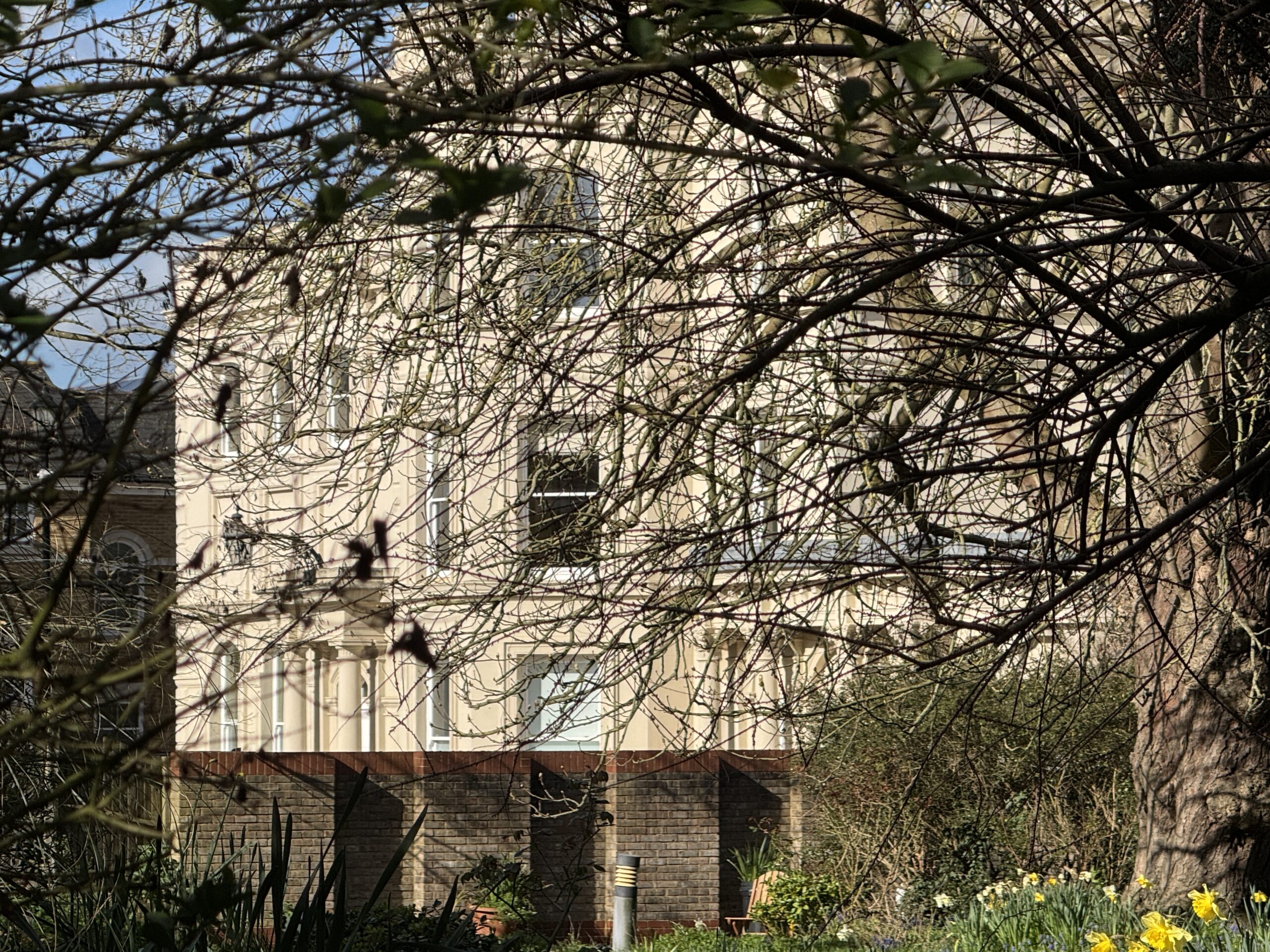
Watson’s Gothic description of the journey there gives us a fascinating glimpse of how remote Lee was from the city of London at the time.
While Sherlock Holmes had been detailing this singular series of events, we had been whirling through the outskirts of the great town until the last straggling houses had been left behind, and we rattled along with a country hedge upon either side of us. Just as he finished, however, we drove through two scattered villages, where a few lights
still glimmered in the windows.
“We are on the outskirts of Lee,” said my companion. “We have touched on three English counties in our short drive, starting in Middlesex, passing over an angle of Surrey, and ending in Kent. See that light among the trees? That is The Cedars, and beside that lamp sits a woman whose anxious ears have already, I have little doubt, caught the clink of our horse’s feet.”
In truth, Lee station had opened in 1866 (30 years before the story was published) so Lee would have become much more accessible to Londoners, though probably not in the middle of the night.